Thursday, 28 January 2016

NDM: WEEK 19(ii)

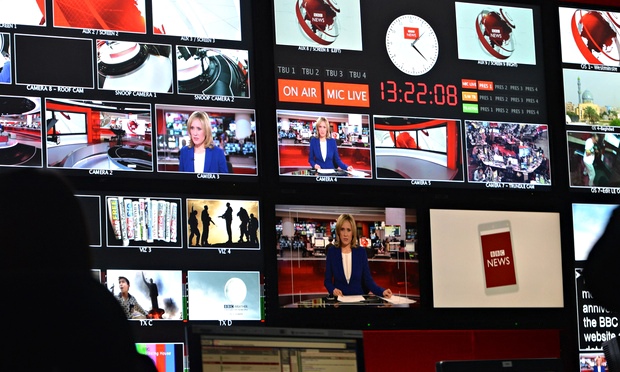
 BBC considering move to make news channel online only

New BBC studios


http://www.theguardian.com/media/2015/jul/07/bbc-considering-move-news-channel-online-only
This article talks about the BBC considering moving their 24 hrs news channel online, and removing their channel from TV. They blame this on the development of new and digital media.

  • BBC will have to shoulder the full £750m cost of free licence fees for people aged over 75 by 2020.
  • channel’s production costs were £26.8m, while its newsgathering costs were £21.2m.
  • taking it online only would prove cheaper for the BBC, which is looking to make savings
  • But like TV news more widely, the channel’s reach has fallen over the last three years


Technology, once again, is transforming the way the BBC tells stories, the way everyone gets stories. In particular, it is changing the way people get breaking news. There is a shift from rolling news channels on TV to streaming news on mobile … This represents an opportunity as exciting as the launch of 24-hour news in 1997 and will force the BBC to think how best we reach people.

NDM: WEEK 19 (i)

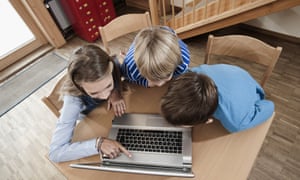
Children spending more time online than watching TV for the first time

Children are spending three hours a day using the internet on an average.


This article discusses the rise in internet use amongst young children. A survey they done found that children spend more time on the internet then other traditional media consumption like TV. According to this article the use of TV has been declining since 2005, but the abrut change is shocking.  

  • average 5 to 15-year-olds were spending three hours a day using the internet, compared to 2.1 hours watching TV.
  • That compares to time spent reading books for pleasure, which has declined from an hour a day on average in 2012 to just over half an hour on average this year.
However the the research, which is based on an online survey of more than 2,000 children, did not distinguish between TV-like services on the internet, such as Netflix/iPlayer, and other forms of browsing such as Facebook, meaning it is unclear whether children are merely watching shows in different ways. suggesting that children may have misinterpreted the question so research may be inaccurate.    

Sunday, 24 January 2016

Post-colonialism: blog task

1) Read the excellent article exploring the different representations of black people in British film and TV from Media Magazine 42 (MM42 fromour Media Magazine archive - page 51)

2) List FIVE films, FIVE TV programmes and FIVE online-only productions that are discussed in the article.

Films:
  • Anuvahood
  • Kidulthood
  • The Mirror Boy
  • Attack The Block
  • Shank
TV:
  • TopBoy
  • Casualty
  • Luther
  • Line of Duty
  • Fresh Prince of Bel Air

Online:
  • Brothers With No Game
  • Venus vs Mars
  • The Ryan Sisters
  • All About The McKenzies
  • Meet The Adebanjos

3) Watch Destiny Ekaragha's clips above (more of her work is available on her website, including the short film The Park). To what extent can we apply Alvarado's and Fanon's theories to these films? Do they reinforce or subvert typical black stereotypes in British film and TV? Refer to specific scenes and events in the clips in answering this question and aim for at least 350 words.
‘Gone Too Far’ supports  Alvarado’s theory by presenting the black youth as dangerous. The This is through the mise-en-scene, in further detail the clothing of the characters wearing what would be seen as stereotypical gangster clothes, such as tracksuits which automatically gives the characters a street image. Also, the female character who is named Armani is given the role to decivilize as ultimately it’s the male characters trying to get her attention. Another example of the typical stereotype being subverted is when the main character meets his brother. This brother, who has just arrived from Africa, has a typical African accent and this subverts the exotic and primitivize theories as the main character himself who’s a black British teenager doesn’t have an accent. Furthermore, a difference between the African brother and main character is seen through the choice of clothing: the African one wears suits and the main character wears a tracksuit. This creates humour for the African brother as he doesn’t adapt to British culture. Also, in another one of Destiny Ekaragha short film ‘Tight Jeans’ Alvarado’s theory of humour is embedded through the use of the three main characters who sit on the wall. This is humorous through their banter and colloquialism which the target audience understand. From my perspective, the type of clothing the characters are wearing is comical as it’s not typical gangster attire and uses bright colours such as blue and orange compared to typically the all black Adidas tracksuits teenagers in Britain usually tend to wear. Fanons decivilized theory factor links to this also because the first thing we see when we see the three main characters is them in hoodies, which typically reinforces the 'gangster' stereotype. However the characters subvert this stereotype as they are in brightly coloured clothes which differentiates them. Also, when a character wearing skinny jeans walks by the gangster character questions curiously “how can man wear jeans that tight?” and this shock factor evokes laughter because the gangster-type character is shocked. Typically, the audience would think that the three gangster-type characters sitting on the wall would threaten the man wearing skinny jeans, but this short film subverts that stereotype which makes it less serious and more comical.
NDM: WEEK 18 (ii)

BBC justifies decision to allow Stephen Doughty to resign live on Daily Politics


The BBC has launched a staunch defence of its journalism after the Labour leadership accused the corporation of pursuing a “particular political narrative” in light of its decision to allow the shadow foreign office minister Stephen Doughty to resign live on air.

  • A Labour party spokesperson said: “By the BBC’s own account, BBC journalists and presenters proposed and secured the resignation of a shadow minister on air in the immediate run-up to prime minister’s questions, 
  • .."apparently to ensure maximum news and political impact. That was evidently done before any notice of resignation was sent to the Labour leader."

NDM: WEEK 18 (i)

US military aims to create cyborgs by connecting humans to computers

                               brain computer
http://www.theguardian.com/technology/2016/jan/20/us-military-cyborg-connecting-humans-computers

he US government is researching technology that it hopes will turn soldiers into cyborgs, allowing them to connect directly to computers.The US military’s Defense Advanced Research Projects Agency (Darpa) has unveiled a research programme called Neural Engineering System Design (NESD) which aims to develop an implantable neural interface, connecting humans directly to computers.


  • Human-computer interfaces are not a new research topic, but most have been hampered by slow, limited control.
  • NESD manager for Darpa, said: “Today’s best brain-computer interface systems are like two supercomputers trying to talk to each other using an old 300-baud modem. Imagine what will become possible when we upgrade our tools to really open the channel between the human brain and modern electronics.”
In my opinion, this shows the extent of the development in technology as it allows us to improve/ develop the military. however this can evoke some serious techno panic.

January assessment Learner Response

1) Type up your feedback in full

WWW:

  • Lots of positives here 
  • Covered a wide variety of NDM aspects
  • Used a fair number of quotes 
EBI:
  • More examples and theories required 
  • Spelled 'elite' wrong thought the essay
  • More topic sentences at the end of paragraphs linking to the question in detail


2) Read through the mark scheme. Of the six different statements, write which you think is currently your strongest and which is weakest. Explain WHY and, for the weakest, what you are going to do to improve in that area.

I had a clear focus on the question, i think this was due to the topic sentences throughout the essay. For my weakness there was an lack of sophisticated application of media debates, therefore I need to improve on applying a range of media debates issues and theories and wider contexts- mainly media issues as I didn't include enough examples. I will research more up to date examples to improve in this area. 

3) Read through the exemplar A grade essay. What does this essay offer that yours does not? Identify THREE things you can take from this essay to improve your own responses in future.

  • Have a longer conclusion
  • More depth into news case study
  • Use more recent examples especially for citizen journalism 

4) Write ONE new paragraph for your January assessment essay. Ideally, this should be a section you did not cover in your original essay. This paragraph needs to be comprehensive and meet the criteria for Level 4 of the mark scheme.

Although the internet has provided basis for a mass of information to be distributed globally, it is also possible for misinformation to occur. This could be done by both professional journalists and amateur bloggers. For example the IBTtimes published a story which stated the Iranian minister for ICT, had announced plans to remove public internet access in Iran and replace it with a state controlled national portal. This information was incorrect and was later removed which proves that even professionals can make mistakes on the internet, making it harder to know who to trust. Wikipedia is likely to be the most unreliable source as it is edited by ordinary people who do not usually know the facts behind a story making it a hard source to trust; despite this people still rely on it as a major source of information.


Friday, 15 January 2016

NDM: WEEK 17(ii)

Charlie Hebdo cartoon depicting drowned child Alan Kurdi sparks racism debate

A special edition of Charlie Hebdo, to mark the one-year anniversary of the jihadist attack. The latest edition features a cartoon with a controversial cartoon of the drowned child Alan Kurdi.

http://www.theguardian.com/housing-network/2016/jan/11/social-housing-tenants-policy-activism-twitter
A French cartoonist in satirical magazine Charlie Hebdo has causedmuch controversy suggesting that drowned toddler 'Alan Kurdi' would have grown up to be a sexual abuser like those immigrants allegedly involved in the assaults in Cologne. showing allot of negative stereotypes of Arabs and Muslims, showing the ignorance of some people in society these days.

  • An insert at the top the cartoon contains the famous image of the three-year-old Syrian boy laying face down dead in the sand. The question at the top of the drawing “What would little Aylan have grown up to be?” is answered at the bottom by “Ass groper in Germany”
  • Kurdi’s death on a beach in Turkey last year galvanised public opinion, and the widespread sympathy for the humanitarian crisis put pressure on European governments.
  • But public opinion has turned in places after hundreds of claims of assaults by immigrants on women on New Year’s Eve in Cologne, Germany. Police and the media have been accused of deliberately under-reporting the events in order not to encourage anti-immigrant sentiment.
  • The cartoon was published a week after the anniversary of the attacks on the offices of Charlie Hebdo, when free speech organisations came together to proclaim the importance of protecting dissenting voices.