Sunday, 24 January 2016

January assessment Learner Response

1) Type up your feedback in full

WWW:

  • Lots of positives here 
  • Covered a wide variety of NDM aspects
  • Used a fair number of quotes 
EBI:
  • More examples and theories required 
  • Spelled 'elite' wrong thought the essay
  • More topic sentences at the end of paragraphs linking to the question in detail


2) Read through the mark scheme. Of the six different statements, write which you think is currently your strongest and which is weakest. Explain WHY and, for the weakest, what you are going to do to improve in that area.

I had a clear focus on the question, i think this was due to the topic sentences throughout the essay. For my weakness there was an lack of sophisticated application of media debates, therefore I need to improve on applying a range of media debates issues and theories and wider contexts- mainly media issues as I didn't include enough examples. I will research more up to date examples to improve in this area. 

3) Read through the exemplar A grade essay. What does this essay offer that yours does not? Identify THREE things you can take from this essay to improve your own responses in future.

  • Have a longer conclusion
  • More depth into news case study
  • Use more recent examples especially for citizen journalism 

4) Write ONE new paragraph for your January assessment essay. Ideally, this should be a section you did not cover in your original essay. This paragraph needs to be comprehensive and meet the criteria for Level 4 of the mark scheme.

Although the internet has provided basis for a mass of information to be distributed globally, it is also possible for misinformation to occur. This could be done by both professional journalists and amateur bloggers. For example the IBTtimes published a story which stated the Iranian minister for ICT, had announced plans to remove public internet access in Iran and replace it with a state controlled national portal. This information was incorrect and was later removed which proves that even professionals can make mistakes on the internet, making it harder to know who to trust. Wikipedia is likely to be the most unreliable source as it is edited by ordinary people who do not usually know the facts behind a story making it a hard source to trust; despite this people still rely on it as a major source of information.


Friday, 15 January 2016

NDM: WEEK 17(ii)

Charlie Hebdo cartoon depicting drowned child Alan Kurdi sparks racism debate

A special edition of Charlie Hebdo, to mark the one-year anniversary of the jihadist attack. The latest edition features a cartoon with a controversial cartoon of the drowned child Alan Kurdi.

http://www.theguardian.com/housing-network/2016/jan/11/social-housing-tenants-policy-activism-twitter
A French cartoonist in satirical magazine Charlie Hebdo has causedmuch controversy suggesting that drowned toddler 'Alan Kurdi' would have grown up to be a sexual abuser like those immigrants allegedly involved in the assaults in Cologne. showing allot of negative stereotypes of Arabs and Muslims, showing the ignorance of some people in society these days.

  • An insert at the top the cartoon contains the famous image of the three-year-old Syrian boy laying face down dead in the sand. The question at the top of the drawing “What would little Aylan have grown up to be?” is answered at the bottom by “Ass groper in Germany”
  • Kurdi’s death on a beach in Turkey last year galvanised public opinion, and the widespread sympathy for the humanitarian crisis put pressure on European governments.
  • But public opinion has turned in places after hundreds of claims of assaults by immigrants on women on New Year’s Eve in Cologne, Germany. Police and the media have been accused of deliberately under-reporting the events in order not to encourage anti-immigrant sentiment.
  • The cartoon was published a week after the anniversary of the attacks on the offices of Charlie Hebdo, when free speech organisations came together to proclaim the importance of protecting dissenting voices.

NDM: WEEK 17 (i)

Sydney man accused of making rape threats on Facebook pleads not guilty

Zane Alchin, 25, of Caringbah, is charged with threatening rape in comments posted to Facebook in August


http://www.theguardian.com/australia-news/2016/jan/12/sydney-man-accused-of-making-threats-on-facebook-pleads-not-guilty

Zane Alchin, 25, of Caringbah, is charged with threatening rape in comments posted to Facebook in August'Zane Alchin is alleged to have committed the offence after one of his friends shared a screenshot of a woman’s Tinder profile on his Facebook page'A Sydney man who allegedly made explicit rape threats on Facebook has pleaded not guilty to using a carriage service to menace.Zane Alchin, 25, of Caringbah was charged in late October for allegedly threatening rape in comments posted to Facebook in August.

  • The offence of using a carriage service to menace, harass or cause offence covers harassment carried out online or over the phone, and carries a maximum jail sentence of three years.
  •  Alchin allegedly committed the offence after one of his friends shared a screenshot of a woman’s Tinder profile to his Facebook page with a derogatory caption, sparking a heated argument between the two individuals’ friend groups.
  • The posts allegedly made by Alchin include “You’ll be eating my cock till you puke” and “I’d rape you if you were better looking”.

Identities and the Media: Reading the riots


  • How did the language and selection of images in the coverage create a particular representation of young people? 
This article presents youths with their dominate ideology of them being reckless and criminals. This article says they are a "civil disturbance" suggesting that they were looked upon by the public as a burden something they can do well without. You can also infer that they were not worthy to be part of  the community as they cause so much trouble presenting them as the "devil".
  • Why does David Buckingham mention Owen Jones and his work Chavs: the demonisation of the working class?
Jones points to the emergence of a new form of class contempt in modern Britain. According to him, the working class, have become an object of fear and ridicule, not just in this kind of media coverage but also in popular figures such as Little Britain’s Vicky P
  • What is the typical representation of young people – and teenage boys in particular? What did the 2005 IPSOS/MORI survey find?
The typical representation of young people today are negative on most occasions. They are portrayed as destructive and irritating. In particular teenage boys are the ones who are represented as the most destructive. This is because they are stereotyped in a very negative way in society and are usually the ones who are unmanageable and wild. In addition, the 2005 IPSOS/MORI survey found that 40% of newspaper articles featuring young people focused on violence, crime or anti-social behaviour; and that 71% could be described as having a negative tone.
  • How can Stanley Cohen’s work on Moral Panic be linked to the coverage of the riots?
A condition, episode, person or group of persons emerges to become defined as a threat to societal values and interests; its nature is presented in a stylized and stereotypical fashion by the mass media; the moral barricades are manned by editors, bishops, politicians and other right-thinking people; socially accredited experts pronounce their diagnoses and solutions; ways of coping are evolved or (more often) resorted to; the condition then disappears, submerges or deteriorates and becomes more visible. His work on moral panics can link to the coverage of the riots as it creates agitation and fear within people, when people go against society's norms and cause damage everywhere.
  • What elements of the media and popular culture were blamed for the riots?
Mark Duggan
The relationship between the police and the black community
 Social networking sites
University fees
Unemployment
  • How was social media blamed for the riots? What was interesting about the discussion of social media when compared to the Arab Spring in 2011?
The rioters were seen as somehow skilful enough to co-ordinate their actions by using Facebook, Blackberry and Twitter. The Sun, for example, reported that ‘THUGS used social network Twitter to orchestrate the Tottenham violence and incite others to join in as they sent messages urging: ‘Roll up and loot’. The ‘Arab spring’ earlier this year were discussions about the use of social networking in the revolutions that took place in countries such as Tunisia, Egypt and Syria – although in those instances, this was generally interpreted by the Western media as a positive. These observations in turn caused some – such as Tottenham MP David Lammy – to call for companies like Blackberry to suspend their services. Some even argued – quite absurdly – that the police might be empowered to ‘turn off the internet’ at the first sign of trouble.
  • What were the right-wing responses to the causes of the riots?
Max Hastings of the daily mail headed, ‘Years of liberal dogma have spawned a generation of amoral, uneducated, unparented, welfare dependent, brutalised youngsters’.
For some right-wing commentators, it is parents who are principally to blame for this situation; while others, such as Katharine Birbalsingh, blame schools for failing to instil discipline and respect for authority – especially, according to her, in black children. For some, this failure even extends to the police – as for one Daily Telegraph letter writer, who argued that the riots were ‘a result of the police caring more for community relations than for the rule of law’. Framing the issue in this way, as a failure of discipline, thus inevitably leads to a call for disciplinary responses.
What are your OWN views on the main causes of the riots?
  • What were the left-wing responses to the causes of the riots?
They argue that it was unsurprising that of the disturbances erupted in areas with high levels of poverty and deprivation – and, they point out, it was tragic that these communities also bore the brunt of the damage. More specifically, they point to the cuts in youth services (Haringey, the borough in which Tottenham is located, recently closed 8 of its 13 youth clubs), rising youth unemployment (which is now over 20% in the 18-25 age group) and the removal of the Education Maintenance Allowance.
  • How can capitalism be blamed for the riots? What media theory (from our new/digital media unit) can this be linked to?
Capitalism can be blamed for the riots as they have too much control in society, which can cause members of the public to rebel. For example, laws made by the capital may only be beneficial for the ruling class rather than the working class. This can cause chaos in society as the working class will not agree to these laws resulting in riots/protests to stop them from occurring. Also, Andrew Keen states that 'blogs and web pages are like a million of monkeys typing nonsense'. Suggesting that people may make up inaccurate and false information and upload it online such as faking a law which no one will agree with, causing others to join the raging crowd. Due to new and digital media, members of the public are able to send messages, pictures etc to friends and tell them about what is happening and persuade them to join the riots. This would eventually go round to the majority of the public creating a huge riot.
  • Were people involved in the riots given a voice in the media to explain their participation?
Riots are sometimes sparked by specific events, but in other cases they appear to be almost arbitrary and spontaneous.Riots may well have deep-seated social causes; but there is often an emotional element– even a kind of adrenaline rush. There may be a copycat effect (which is similar to Cohen’s idea of ‘deviance amplification’): people may respond to rumours or media coverage of riots in other areas by seeking to ‘make their mark’ in the media. There may also be an element of opportunism, as people take the chance to indulge in behaviour that would normally be taboo.
  • What is your own opinion on the riots? Do you have sympathy with those involved or do you believe strong prison sentences are the right approach to prevent such events happening in future.
In my opinion, i do sympathize with the riots. However, some younger In the Guardian website's investigation into the causes of the riots, they did interview rioters themselves. Read this Guardian article from their Reading tIn the Guardian website's investigation into the causes of the riots, they did interview rioters themselves. Read this Guardian article from their Reading tIn the Guardian website's investigation into the causes of the riots, they did interview rioters themselves. Read this Guardian article from their Reading tIn the Guardian website's investigation into the causes of the riots, they did interview rioters themselves.

Friday, 8 January 2016

NDM: WEEK 16 (ii)

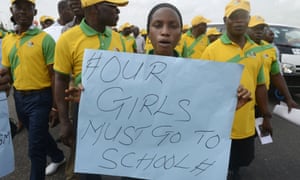
The #BringBackOurGirls of 2016: what will dominate Africa's Twittersphere this year?

Nearly two years days after the Chibok schoolgirls were kidnapped by Boko Haram, the right to education in Nigeria has dominated debate.


http://www.theguardian.com/world/2016/jan/04/africa-twitter-predictions-2016-hashtags-bringbackourgirls

Nearly two years days after the Chibok schoolgirls were kidnapped by Boko Haram, the right to education in Nigeria has dominated debate. Hashtags have become a key way to measure how millions of people react to the biggest news events and debates of the day. They’re also where some of the best jokes are made. Mapping this trend, satirical news site YesiYesighana and digital bloggersCircumspecte have just released their list of the most influential topics debated by Africans on Twitter (#AOT) in 2015.

  • From #BringBackOurGirls which, on 6 December, marked 600 days since the schoolgirls of Chibok were abducted by Boko Haram, to #WhatWouldMagufuliDo, 
  • a tribute to the newly-elected Tanzanian president’s “revolutionary” commitment to cutting wasteful government spending, looking back at popular hashtags offers a useful overview on how the big events of the year played out online. 
  • “If African Twitter was a bar then the year 2015 would have been one of those memorable nights out,” YesiYesighana said. “Noisy drinkers would be eating jollof while debating xenophobia, everyday sexism and everything in between.

NDM: WEEK 16 (ii)

Anti-Isis hackers claim responsibility for BBC cyber-attack

http://www.theguardian.com/media/2016/jan/02/bbc-cyber-attack-anti-isis-hackers-claim-responsibility

Lynam told BBC Breakfast that the technology correspondent, Rory Cellan-Jones, had received a tweet from a group calling itself New World Hacking (NWH), claiming responsibility for a distributed denial of service (DDoS). It bombarded the system with 600 gigabits a second of messages. The New Year’s Eve attack took down the iPlayer and other services for a few hours, according to Joe Lynam, the BBC’s business correspondent.

  • Lynam said: “Their ultimate goal, believe it or not, is not to attack the BBC but to go for Isis, the group which often calls itself Islamic State, and 
  • all their servers so they cannot spread propaganda from various different websites.“What this group does is to take down various different websites it believes to be criminal and leading to terrorist acts. 
  • It posts the website which has been taken down with the hashtag ‘tangodown’ or ‘takendown’ deliberately by a distributed denial of service (DDoS), which is what hit the BBC two days ago.
  • “We have to stress we have no evidence, but this group is claiming responsibility for this DDoS attack and they claim their ultimate goal is to take down Isis websites.”

“The reason we really targeted [the] BBC is because we wanted to see our actual server power. It was only a test, we didn’t exactly plan to take it down for multiple hours.”

NDM: WEEK 15(ii)

Has social media ruined the web?

Logo of the Twitter and Facebook seen through a magnifier.


http://www.theguardian.com/media/2015/dec/31/has-social-media-ruined-the-web

Has the web lost its power to drive social change? This is the conclusion of Iranian blogger Hossein Derakhshan, imprisoned by the regime in 2008 and released and pardoned in 2014.
The rise of smartphones and apps had changed the online world. Blogging and independent websites had been overtaken by social media networks, with the likes* of Facebook, Twitter and Instagram dominating the market.

  • "Nearly every social network now treats a link as just the same as it treats any other object – the same as a photo, or a piece of text. 
  • You’re encouraged to post one single hyperlink and expose it to a quasi-democratic process of liking and plussing and hearting. But links are not objects, they are relations between objects. This objectivisation has stripped hyperlinks of their immense powers"